





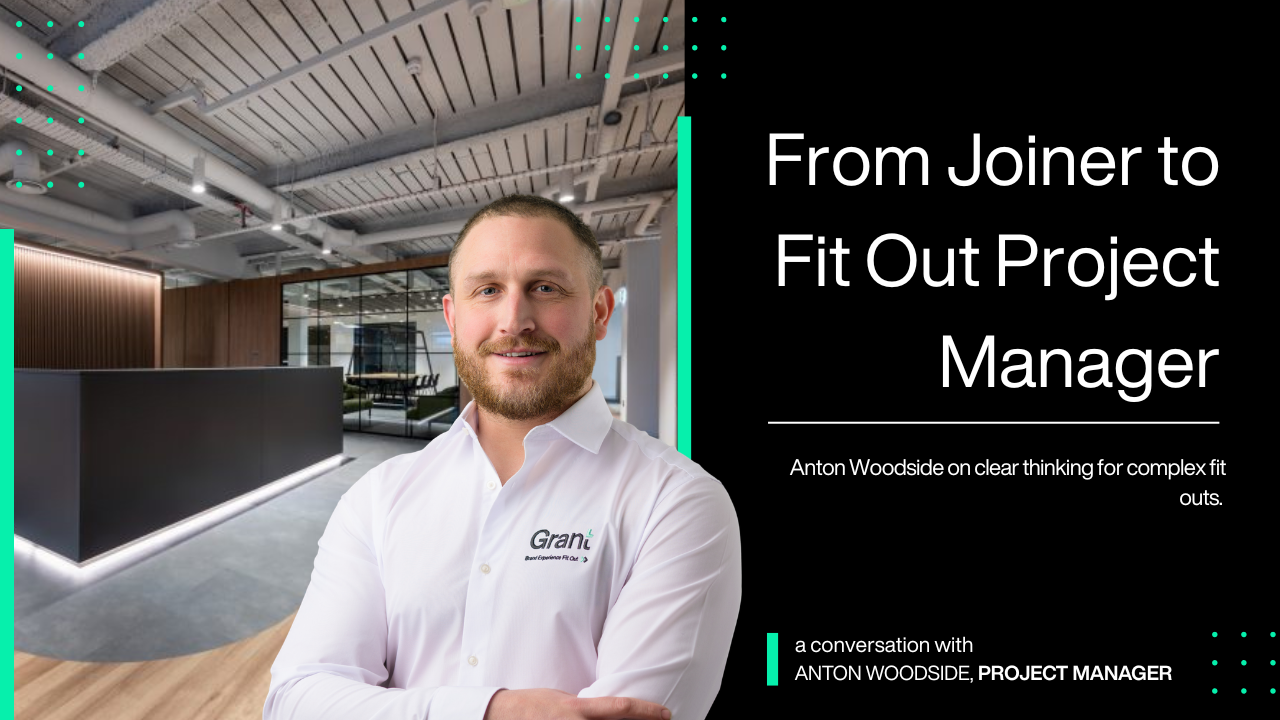
Anton Woodside on clear thinking for complex fit outs.
Having started his career as a joiner, Anton learned early that high quality is the result of hundreds of small decisions throughout a project.
As Anton puts it:
"The little details matter. If you get the small things right consistently, the bigger things fall into place."
Long before work starts on site, accurate information, a well-defined scope, and a strong understanding of the challenges will all help shape the outcome for the people who will ultimately occupy the building. For Anton, quality is driven throughout the process.
In fit-out construction, quality is often judged by what people can see - the flawless paint finish, the clean joints, the tidy grouting.
But in reality, quality starts long before any of those things become visible.
As a Project Manager with Grant Fit Out, I've spent years delivering complex refurbishment and fit-out projects across offices, schools, retail environments and hospitality settings. Before that, I started my career as a joiner.
Looking back, that hands-on experience still shapes how I approach every project today.
Quality Is built layer by layer from the very beginning.
Quality starts when a tender lands on your desk. It continues through design reviews, technical submissions, stakeholder engagement, programme planning and subcontractor coordination. By the time the finishes are being installed, the foundations for quality have already been laid.
As a joiner, precision is non-negotiable. If a cut was wrong, the finished product was imperfect. That lesson stays with you.
Today, I view quality in much the same way. Every decision made during the planning and coordination stages has a direct impact on the finished environment.
Seeing Projects Through the Eyes of the Trades
Starting on the tools gives you a different perspective.
You understand the practical realities of coordination and installation faced by trades on site. And you understand what good workmanship actually looks like.
That experience helps when making decisions as a Project Manager.
When reviewing design details, coordinating technical submissions or assessing buildability, I can draw on practical knowledge of how materials, systems and finishes come together in the real world.
The best project management is about understanding how decisions made in a meeting room will affect the people delivering the work on site.
When people think about craftsmanship, they often focus on visible finishes.
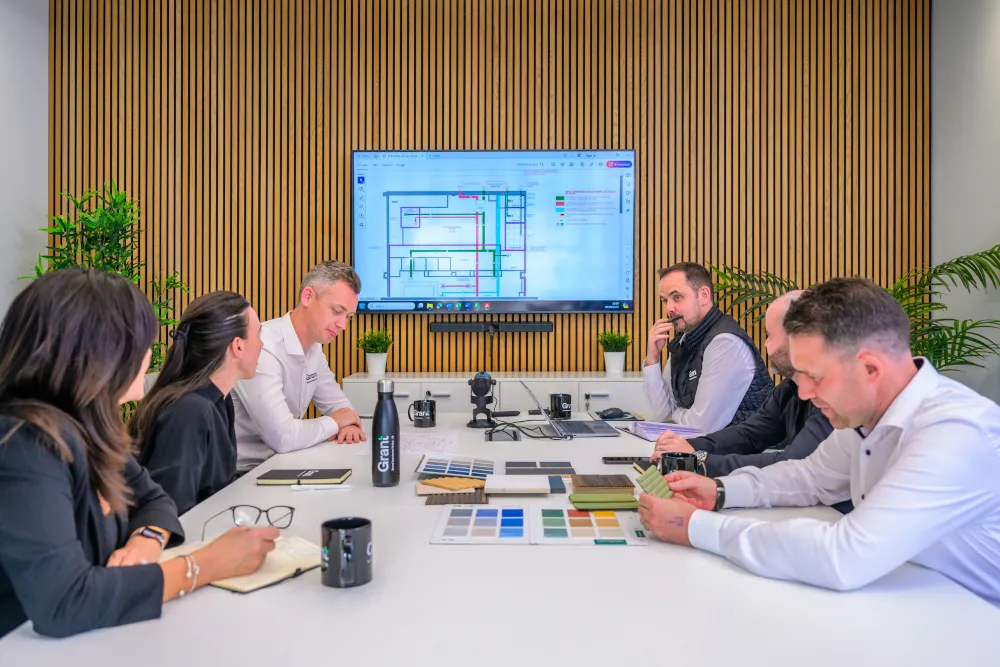
In reality, some of the most important methodologies are hidden behind walls and ceilings. Accurate setting out. Coordinated services. Well-planned sequencing. Technical approvals. Clear communication between designers, consultants and subcontractors.
These are the elements that prevent programme delays, waste, rework and frustration. It’s actually the thinking and the planning that delivers certainty.
The client may never see the countless decisions that happen before a wall is closed up. But they will experience the result.
That's why true craftsmanship is often invisible because it underpins building performance as well as aesthetics.
Snag as you go
One of the first things I notice when I walk onto a project is the condition of the site.
A clean, organised site shows ownership and pride in the outcome.
It also demonstrates respect for health and safety, programme delivery and fellow trades.
Messy sites create problems. Well-managed sites create confidence.
Clients, architects and consultants can arrive unannounced at any stage. When they do, the project should reflect the standards you're aiming to achieve at handover.
Quality is important every step of the way - not just at snagging stage.
Relationships Drive Results
Technical skill and technology are critical, but construction is all about people - the successful projects are built on strong relationships - with clients - with consultants - with subcontractors.
Relationships are built on trust, communication and accountability.
When those relationships are strong, problems are resolved faster, decisions are made with confidence and projects benefit from genuine collaboration.
The tools may change. The technologies may improve. The procurement routes may evolve.
But projects are still delivered by people who care about getting the details right and take ownership.
For me, that's the enduring value of craftsmanship. It's a mindset.
And it's just as important in the project management office as it is on the tools.